
Sentinels
A Science Fiction Story

The children came onto the street as the sun settled into the western sky. The rain had past, and the clouds were clearing. For a brief time, the street seemed to fill with golden light, glinting wetly on the black asphalt of the road. Then the house shadows began to creep over the road, and the tree shadows pooled across the lawns.
The children gathered in groups of mostly threes and fours. Some groups were mixed, but not all. The street hockey group was made up of two boys and two girls, while farther along the touch football group was all boys. A group of five chalked coloured squares on the sidewalk and began a game of hopscotch, while others ran up and down the boulevard playing tag, using the trees as ways to evade one another. The oldest and tallest tree that stood halfway down the block was homebase.
Trees lined both sides of the street, standing tall and still in the summer evening, their branches forming a green canopy over the road. The street rang with the calls and cries and shrieks of children at play. The evening grew long, the sky deepening to indigo, while the twilight gathered beneath the branches of the trees.
The street belonged to the children. the Sentinels said it was a safe place. Many places in the city were unsafe, and the Sentinels would never allow the children to venture where it wasn’t safe.
The street was always a busy place, especially as the days lengthened into summer. The children would ride bicycles, create ramps for skateboards, and hold footraces. Sometimes all the children would gather together to play a raucous game of Red Rover. One of the Sentinels had even fixed basketball hoops to trees either side of the road to create a makeshift court.
***
As the evening wore on, the smaller games broke up and the children gathered, their eyes bright and their faces glowing. Someone suggested hide-and-seek, which was followed by a murmur of assent. A chorus of not-its rang out, leaving a small girl as it. Her eyes smiled, but her mouth was trying hard to not show how unhappy she was.
So she stood, her eyes covered by delicate brown hands, leaning against the homebase tree. She counted to one hundred. Laughing and shrieking children soon vanished, and the street, once full of children, now held only one, counting slowly against the tree. When she reached one hundred, she uncovered her eyes and looked up and down the shadowy street. “One-two-three, here I come!” she shouted. She ran lightly up and down, peering here and there, looking for the others.
One by one, those in hiding were either found or burst from cover, racing and shrieking their way to the homebase tree.
Cries of “Not fair!” or “Home free!” echoed up and down the street. She who was it only managed to tag three other children, two smaller than she. Soon, most of the children were gathered around the homebase tree, some laughing, others beginning to shiver in the cool of the twilit.
Lights suddenly bloomed in windows, and doors began to open up and down the street. Squat, barrel-shaped figures, four-armed and two-legged, came down the sidewalks to wait. The children gathered round the homebase tree looked and saw; they groaned. Disappointed cries from the stragglers could be heard as they emerged from hiding.
Reluctantly, the last of the children gathered at the homebase tree. Then, calls of “Goodnight,” and “See you tomorrow” cut through the darkening evening.
The children filed in ones and twos and sometimes threes to their home sidewalks, past the standing figures, who offered encouragement as they turned and followed the children inside the houses. And the street was quiet once again.
Quiet, but not empty. The small figure still crouched by the homebase tree—the girl who was the seeker in the game of hide-and-seek. One final figure waited at the foot of a sidewalk, not moving, but with lights blinking inside the dome that sat atop the barrel-shaped body. The child still crouched, and, finally, the figure began to move. It walked on rubber-soled, metal feet to where the child crouched.
“Come, Maudie,” it said, its voice pitched low. “It’s late. It’s time for snack and then bed.”
“I don’t want to,” said Maudie, her hands covering her face. “I’m sick of bed!”
“I’ve made your favourite cookies. The ones with the sprinkles.”
“I don’t care. And I don’t have to listen to you. You’re not my mother.”
“But you must,” said the gentle voice, blue lights swirling across the dome. “It’s getting late, and how can you be ready for your day tomorrow if you don’t come in. Small people need their rest.”
“I don’t want to rest. I’m not tired.”
“But I have your snack waiting. You can have a bath, then we can continue the story.”
A pause.
“I don’t like it.”
“The story?”
“You don’t tell it very well.”
“Then you can help me tell it better. How about that?”
Another pause.
“All right. But only because I want to. Not because you tell me. You ... you’re not even a person. You’re just a gadgety thing that talks like a person.”
“I’m a Sentinel. I’m here for your protection.”
“That’s what you say. I don’t need protection. Nothing bad ever happens.”
“That’s because we are careful to keep you and the other children safe. As long as you stay in the safe zones, you will always be fine.”
“You ... you don’t even let me stay out late. You always tell me what to do.”
“That’s because I care about you and what happens to you.”
Silence.
“Come, Maudie. Please. You’re shivering. You’re cold.”
A long pause.
“All right. I’ll come, but only because I want to. Not because you tell me.”
“I understand. Now come, I’ll carry you.”
Maudie put up her arms, and the four arms of the Sentinel gently lifted her, cradling and rocking her until Maudie began to giggle. One rubber sheathed hand stroked her long, black hair. The Sentinel walked up the front sidewalk and into the house. The door was shut on the evening.
In a surprisingly short time, lights went out up and down the street. Children were given their snack, they were tucked in, and each was told the next part of the story. It was a long story, all about the world before the Sentinels came, the world as it had been, the world that was run by grownups, who were intent on destroying the world with plastics and war and greed, until the Sentinels arrived and put a stop to it.
When that part of the story was done, some of the Sentinels went to fetch glasses of water, and some sang to their charges. Soon, the children were drifting into sleep, one after another.
The Sentinels did not sleep. Each logged the events of the day, then sent the log to the ship in orbit, where the information was correlated and stored. The Sentinels completed household tasks of one kind or another, then they, too, one by one, powered down for the night. But all had sensors to detect movement or cries in the night.
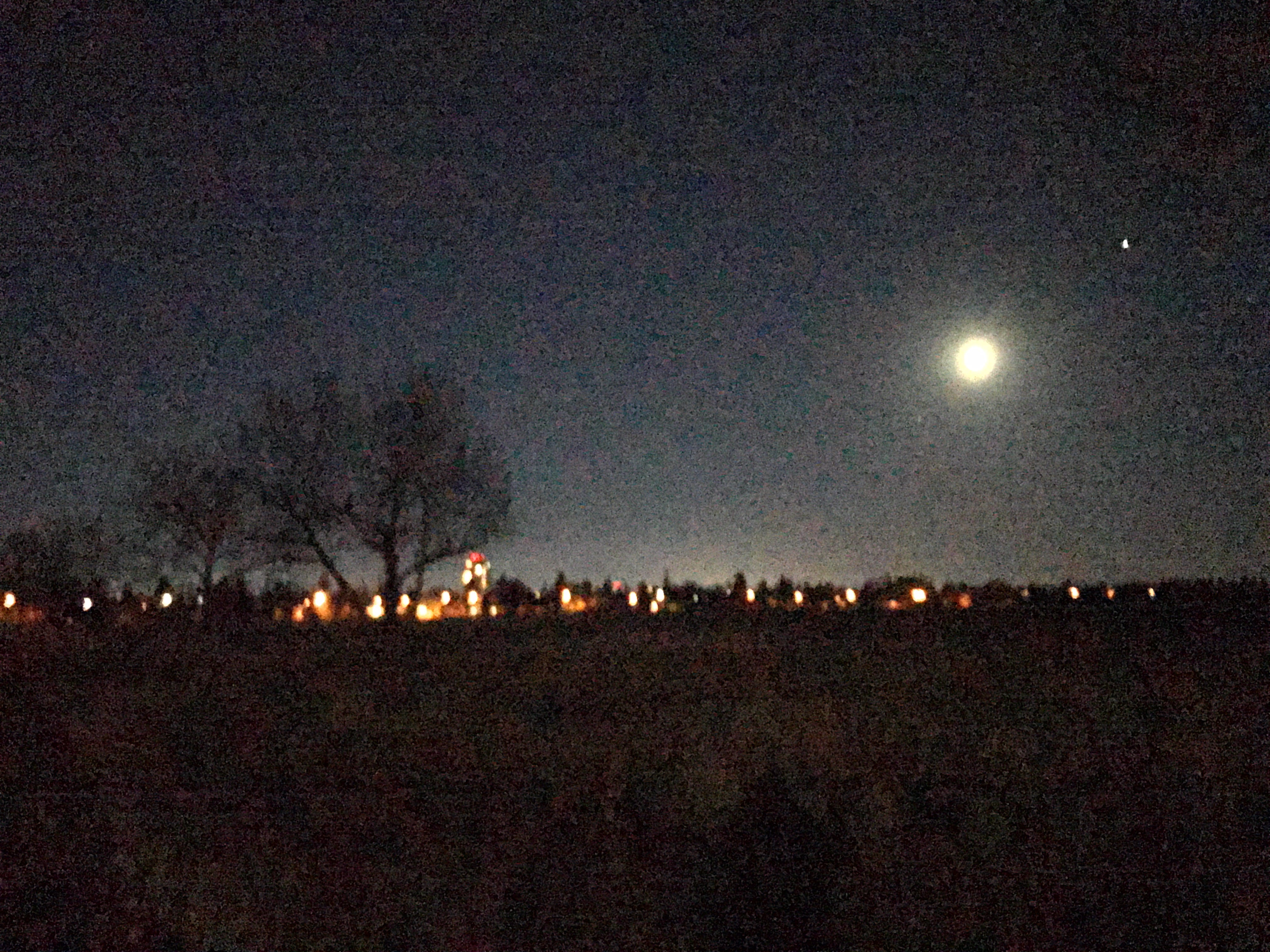
Outside, the street slept—one street in an abandoned city in a mostly empty world. Empty of adults, but not children. Here and there, in other cities, other Sentinels were similarly putting their charges to bed, or waking them up to begin their days, while the great ship, large enough to appear in the night sky as a second, if much smaller, elongated moon, gathered and correlated data, and waited.
Reminds me of Bradbury!